Karaoke Night Management Software: What It Should Actually Solve

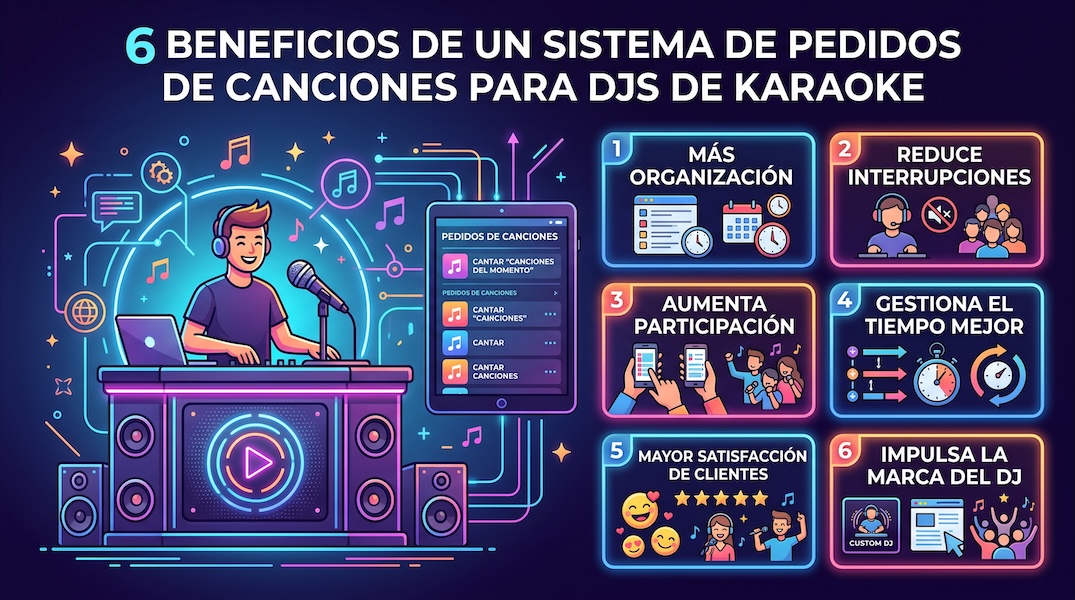
Karaoke night management software should solve the problems that surface when a venue gets busy: lost song requests, singers unsure when their turn is coming, and staff pulled away from other duties to answer the same questions. The goal is not to collect features. It is to help the DJ, team, and guests move through the night with less friction.
Before comparing tools, identify the part of your current routine that takes the most time or causes the most complaints. A quieter bar may need a simple request list and a clear display. A packed venue may need mobile requests, turn management, and a fast way to update each song’s status. For a closer look at digital requests, read this comparison of digital song requests and paper lists.
Start with the work of a real shift
Watch a full karaoke night, from opening the list to the final singer. Note each interruption and who has to handle it. Is the DJ searching through slips of paper? Does a server keep asking who is next? Do guests gather around the booth to check their place? Each answer points to a practical operational need.
A useful system keeps information moving between the person making a request, the person managing the show, and the person singing. That does not mean automating every decision. The DJ still needs discretion to handle changes, special guests, inappropriate songs, or a round that is running long.
Features worth testing
- Organized requests: Guests can submit a song title and artist without relying on the DJ to hear a conversation over the music.
- A visible queue: A display or simple way to check the order can reduce questions, without promising an exact start time when the show’s pace may change.
- DJ control: The host can review, reorder, pause, or remove requests and handle exceptions without losing track of the list.
- Clear guest instructions: Newcomers can quickly learn how to request a song and where to wait.
- A backup process: The team knows what to do if the internet, a device, or the main screen stops working.
- Useful records: The venue can spot popular songs, busy participation periods, or steps where requests tend to stall.
QR requests can be convenient, but a code alone does not run a karaoke night. Decide where to place it, what instructions to show, and who will monitor incoming requests. This guide explains how QR karaoke requests work.
Test before you choose
Do not judge a platform only during a quiet demo. Recreate situations you expect at your venue: several requests arriving close together, a song that needs to be removed, a singer changing their mind, and a brief service interruption. Check whether the DJ can handle each situation quickly and whether the guest understands what is happening without a long explanation.
For an illustrative example, imagine a bar receiving 24 requests in one night. If each question about a request takes a minute and the team handles 12 such questions, that is 12 minutes spent on conversations that visible instructions and a clear queue might reduce. This is not a savings promise or a research statistic; it is a simple calculation any venue can redo using its own timings.
Test the guest experience, too. Can someone find the request option from their table? Can they tell whether a request was received? Do they understand that the DJ may adjust the order? If the process feels confusing in a short test, it will be harder to explain once the room is full.
A step-by-step karaoke night example
Imagine a bar opening its request list at 8:30 p.m., with more guests expected after 10. Before opening, the DJ checks that the display is easy to see, places instructions beside the request code, and confirms who will answer basic questions. Staff know that servers handle drink questions while the DJ handles song requests.
At 9:00, the first group sends a request. The DJ checks that the song is available and adds it to the queue. As more guests arrive, they can check the status without crowding the booth. At 10:15, a singer asks to remove a song; the DJ updates the list and briefly announces the change. If the connection drops, the team follows its agreed backup process and temporarily records pending requests. At closing, the DJ notes what worked and what caused friction before the next event.
This approach combines technology with human judgment. A virtual console such as Dj Link is one example of bringing requests and controls into a shared workflow, but the tool should fit the venue’s style—not the other way around.
Decide whether the tool fits
Compare the full cost with the work the system actually makes easier. Include setup, required devices, connectivity, and staff training. Ask what happens when a guest has no mobile data or does not want to use a phone; a staff-assisted alternative is still useful.
Define how you will assess an initial trial. Over two or three nights, record lost requests, questions directed to the DJ, time spent resolving changes, and recurring guest comments. Do not judge the system only by the number of requests submitted: a tool can collect plenty of songs and still leave everyone confused. For broader ways to evaluate a karaoke event, see how to measure karaoke night success beyond sales.
Frequently asked questions
Does karaoke management software replace the DJ?
No. It can organize requests and simplify controls, but the DJ still reads the room, makes decisions, and keeps the show moving.
Do I need QR requests to use karaoke software?
Not necessarily. Choose a request method that suits your guests, and keep a simple staff-assisted option for people who prefer it.
How can I tell if the software works for my venue?
Test it during real events and track interruptions, errors, queue clarity, and how easy it is for guests and staff to use.
Want to bring this to your own karaoke night? See how Dj Link handles QR song requests, tips and the singer queue for DJs and venues — or keep reading in the Dj Link blog.